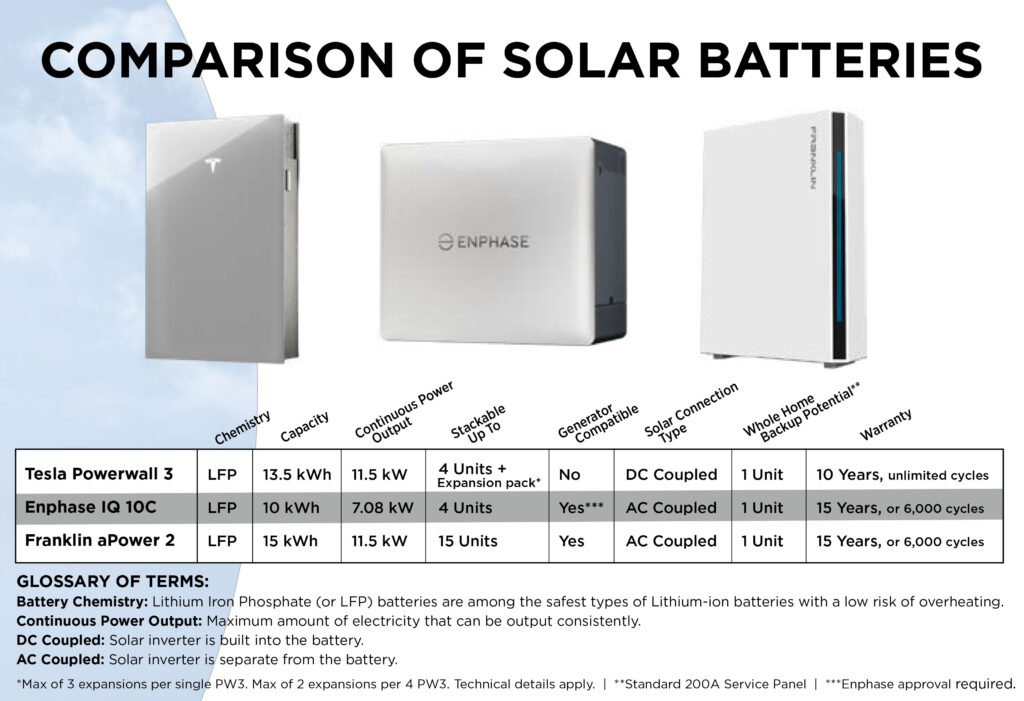
Battery storage comparison: Participate Energy uses Tesla Powerwall 3, Propel uses Enphase IQ batteries.
The homeowner tax credit expired at the end of 2025. A prepaid lease is the structure that lets you still capture a share of the commercial credit, pay once, and carry no monthly solar bill for 25 years.
A prepaid lease is a third-party ownership structure. The provider temporarily holds the system, claims the commercial ITC, and passes those savings to you as a lower price. You pay once and carry no ongoing monthly bill.
The solar provider (Participate Energy, Concert Finance via Propel, or another commercial operator) takes title to the system during the initial period. This commercial ownership structure is what enables the commercial ITC to be claimed.
The provider claims the federal commercial Investment Tax Credit on the system. That credit value, typically 30-40% of the system cost, is reflected in your prepayment amount. You pay the net price after the credit is applied. You never claim the credit yourself.
Once the upfront prepayment is made, there is no monthly solar payment for the entire term. You can pay the prepayment in cash, or finance it through a lending partner. Either way, the ongoing monthly bill is zero.
Most prepaid lease structures include an ownership option after the initial period. Propel transfers ownership automatically at Year 5 with no extra payment. Participate Energy gives you the option to purchase at fair market value starting at Year 6. Either way, you are not locked out of ownership permanently.
The residential solar tax credit was a major driver of solar adoption for a decade. Its expiration changed the math for most homeowners, but not for those using commercial ownership structures.
The One Big Beautiful Bill, passed in 2025, eliminated the residential Investment Tax Credit effective at year end. Homeowners who purchase solar with cash or a standard loan can no longer claim the 30% federal credit. This removed approximately $8,000 to $25,000+ in value from a typical residential solar purchase, depending on system size.
The commercial ITC, however, remains available through the end of 2027 for systems installed by businesses and commercial entities. Prepaid lease providers like Participate Energy and Concert Finance (via Propel) are structured to qualify for this commercial credit.
When you enter a prepaid lease, the provider claims the commercial ITC and passes the savings to you as a lower prepayment amount. You are effectively accessing a share of a credit you could not otherwise claim. This is the core economic argument for prepaid leases in the post-2025 market.
Four different structures, four different outcomes. Here is what distinguishes a prepaid lease from the alternatives.
| Feature | Prepaid Lease | Monthly Lease | PPA | Solar Loan |
|---|---|---|---|---|
| Upfront payment | One-time prepayment (financeable) | $0 down | $0 down | Often $0 down |
| Ongoing monthly bill | None | Yes. Fixed monthly lease payment. | Yes. Per-kWh rate, may escalate. | Yes. Loan payment for 20-25 years. |
| Payment escalation | None. Pay once and done. | Common. 1-3%/yr escalators typical. | Common. 1-3%/yr. Can exceed utility rate by Year 10. | Fixed (but often at inflated price) |
| Commercial ITC access | Yes. Discount applied upfront. | Provider keeps it | Provider keeps it | No (homeowner ITC expired) |
| Ownership outcome | Option at Year 5 or 6 | Lease, may never own | No ownership in standard PPA | Immediate (at inflated cost) |
| Credit check | Depends on product (Participate: none; Propel: 660) | Yes | Yes | Yes (660+ typical) |
| Home sale complexity | Simple transfer, no buyer credit check | Buyer must assume lease | Buyer must assume PPA | Pay off at closing |
← Scroll to see full table on mobile
A prepaid lease is not the right structure for every homeowner. Here is a clear breakdown.
Solar Advisors partners with both major commercial ITC passthrough products available to California homeowners. The two-minute assessment determines which one prices out better for your specific address.
Propel bundles the prepaid structure with a Concert Finance loan. The ITC discount is applied upfront, and you finance the remaining balance at a fixed 7.79% APR over 25 years. No large lump sum needed. Ownership at Year 5. Credit minimum: 660 FICO.
Best for: Energy Community zip codes (39.2% discount), homeowners who prefer monthly payments, Enphase battery users.
Learn More About Propel →Participate requires a single upfront prepayment (financeable through lending partners). No FICO minimum. No UCC lien. Tesla Powerwall available. Ownership option at Year 6. Transferable on home sale with no buyer credit check.
Best for: Non-EC zip codes, homeowners without credit or who prefer no credit check, Tesla Powerwall buyers.
Learn More About Participate →
Battery storage comparison: Participate Energy uses Tesla Powerwall 3, Propel uses Enphase IQ batteries.
The two-minute assessment runs your address against both products and shows you the real numbers: discount amount, estimated savings, and monthly impact.